
 EN
EN
 AR
AR
 HI
HI
 JA
JA
 KO
KO
 NO
NO
 RU
RU
 CA
CA
 TL
TL
 IW
IW
 ID
ID
 SR
SR
 UK
UK
 VI
VI
 SQ
SQ
 GL
GL
 MT
MT
 TH
TH
 TR
TR
 FA
FA
 AF
AF
 MS
MS
 SW
SW
 CY
CY
 IS
IS
 MK
MK
 HY
HY
 AZ
AZ
 EU
EU
 KA
KA
 HT
HT
 UR
UR
 BN
BN
 LA
LA
 MN
MN
 NE
NE
 SO
SO
 MY
MY
 KK
KK
 UZ
UZ
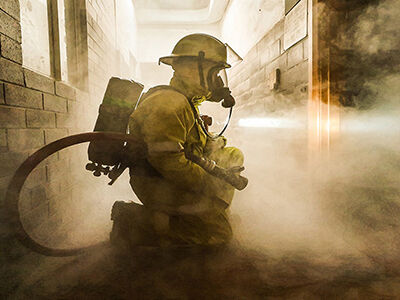
When firefighters transition from battling structural fires in urban buildings to confronting engine room blazes on vessels, the threats they face are fundamentally different. Though both fall under the umbrella of "firefighting," the inherent differences in the operational environment lead to distinct priorities and standards for personal protective equipment.
Urban Firefighting: A Protection System Centered on EN 469 and NFPA 1971
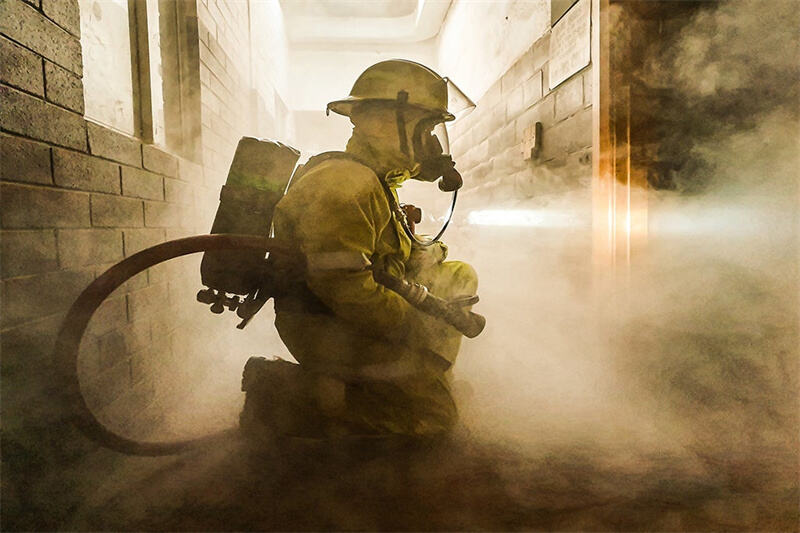
Urban firefighters primarily confront structural fires—in residential buildings, commercial spaces, and offices. These fires are characterized by complex fire spread paths, risks of collapse, and the accumulation of hot smoke. However, the environment is relatively "open," with defined access and egress points. The core standards are [European Standard EN 469 and American Standard NFPA 1971].
EN 469 is the core standard for structural firefighting suits adopted by EU member states and many regions globally. Based on the analysis of extensive real-world fire data, it aims to provide protection that ensures firefighters' survival and health in actual fire environments, covering the vast majority of operational needs. It emphasizes a balance between protection, flexibility, breathability, and weight.
NFPA 1971, developed by the National Fire Protection Association (USA), tends to presuppose "worst-case scenarios." It demands that firefighters maintain effective combat capability in extreme fire environments, pursuing absolute reliability under extreme conditions.
Both EN 469 and NFPA 1971 impose systematic performance requirements on firefighting equipment. For example, structural firefighting suits typically adopt a three-layer composite design:
• Outer Shell: Must be flame-resistant, abrasion-resistant, and tear-resistant, providing direct defense against flames and radiant heat.
• Moisture Barrier: Must resist the penetration of water and chemicals while allowing sweat vapor to escape, reducing the risk of heat stress.
• Thermal Liner: Must provide thermal insulation, slowing the transfer of heat to the body.
Furthermore, urban firefighting standards place a high priority on ergonomics and flexibility, as firefighters need to frequently climb stairs, maneuver in confined spaces, and perform precision forcible entry tasks.
Shipboard Firefighting: A Regulatory System Framed by SOLAS, FTP Code, and FSS Code
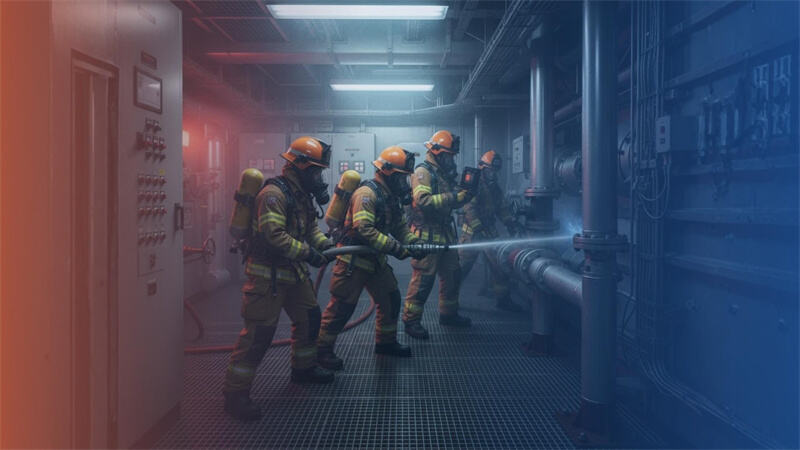
Shipboard firefighting takes place on a confined, mobile, steel island with limited resources. Engine room fires, cargo hold fires, and accommodation area fires all occur within restricted spaces, far from shore-based support. Consequently, the regulatory framework for shipboard firefighting equipment is characterized by its mandatory nature, international scope, and highly structured approach.
The overarching regulation is the SOLAS Convention. Its technical requirements are detailed in the FTP Code and the FSS Code. Based on these three pillars, a shipboard firefighter's outfit is defined as a complete system, typically comprising:
• Protective Clothing (waterproof, flame-resistant, insulating properties)
• Firefighting Boots (puncture-resistant, slip-resistant, insulating)
• Firefighting Gloves
• Firefighting Helmet (with visor)
• Safety Belt and Lifeline
• Safety Lamp
• Self -Contained Breathing Apparatus (typically requiring a minimum air capacity of 1200 liters)
All equipment must be flame-resistant, waterproof, and anti-static. Critically, according to the latest EU implementing acts and statements from authorities like the Paris MoU and major classification societies (e.g., American Bureau of Shipping), only protective clothing that meets the EN 469:2020 standard, specifically at the Level 2 performance tier, is considered suitable for entering enclosed spaces like engine rooms for firefighting operations.
For other components of the outfit, compliance with relevant EN standards is also required. Fire equipment that meets EN standards, carries the corresponding certification, and is supplemented with MED (Marine Equipment Directive) certification is currently recognized internationally as the professional standard for shipboard firefighting, especially in confined spaces.
ATI-FIRE possesses a deep understanding of the complexities inherent in diverse firefighting scenarios. We offer a comprehensive range of firefighting equipment certified to the highest performance levels of EN standards. Our commitment is to ensure that no matter the extreme environment—whether above the city or between the waves—firefighting professionals can rely on our gear for steadfast protection.
If you require further information about specific equipment or have additional questions regarding the selection of appropriate firefighting equipment, ATI-FIRE welcomes inquiries from fellow professionals and those with procurement needs.