
 EN
EN
 AR
AR
 HI
HI
 JA
JA
 KO
KO
 NO
NO
 RU
RU
 CA
CA
 TL
TL
 IW
IW
 ID
ID
 SR
SR
 UK
UK
 VI
VI
 SQ
SQ
 GL
GL
 MT
MT
 TH
TH
 TR
TR
 FA
FA
 AF
AF
 MS
MS
 SW
SW
 CY
CY
 IS
IS
 MK
MK
 HY
HY
 AZ
AZ
 EU
EU
 KA
KA
 HT
HT
 UR
UR
 BN
BN
 LA
LA
 MN
MN
 NE
NE
 SO
SO
 MY
MY
 KK
KK
 UZ
UZ
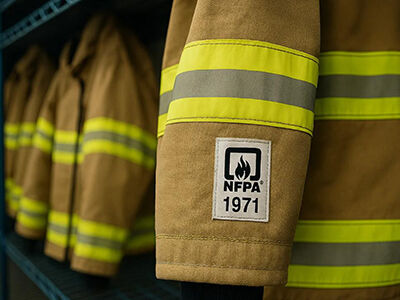
On the global shelves of firefighting equipment, would you choose the EN 469 European standard or the NFPA 1971 American standard? What is the fundamental difference between these two standard systems? Does choosing one mean selecting a higher or lower safety grade?
In reality, this is not a simple competition of "which is better". EN 469 and NFPA 1971 represent two parallel, authoritative systems in the global firefighting equipment field, underpinned by different core philosophies: EN 469 is more balanced and human-centric, while NFPA is more focused on extreme operations.
Survival Assurance vs. Extreme Operations
The fundamental difference between the two standards stems from their originally defined objectives.
EN 469, as the core European standard for firefighting, focuses more on real fire grounds. It aims to protect firefighters' survival and health in actual fire environments, covering the vast majority of practical needs, winning time for safe evacuation or completing basic tasks. It is based on a "sufficiency" engineering mindset. Its logic is to scientifically define the necessary performance threshold to ensure firefighters' life safety and health through the analysis of extensive real fire data. It pursues reliable protection under typical risks.
NFPA 1971, developed by the National Fire Protection Association (USA), tends to presuppose "worst-case scenarios". It demands that firefighters maintain effective combat capability in extreme fire environments, aiming to prepare for the "worst environment." It is based on a "redundancy" military mindset. Its logic is that to cope with unpredictable "worst cases," it must set performance benchmarks far exceeding common risks, providing massive safety margins. It pursues absolute reliability under extreme conditions.
Agile Execution vs. Enduring Survival
EN 469 and NFPA 1971 also differ in their focus on effectiveness.
EN 469 emphasizes “overall balance”, focusing on optimizing between protection, flexibility, breath ability, and weight to avoid over-equipment. It stresses that clothing must not become abnormally bulky or restrictive due to the over-pursuit of singular performance metrics, as this would affect firefighters' mobility, agility, and exacerbate heat stress. The purpose of its protective gear is to allow firefighters to "forget the existence of the equipment" (within safe limits).
NFPA 1971 adheres to protection performance priority. To achieve extreme protection indicators, it may compromise on weight and volume. The primary goal is to ensure the human body's core functions do not fail in extreme environments. Therefore, the gear's core task is to construct a "survival pod" that resists external extreme assaults (heat, flames) and actively manages the internal micro-environment (heat, moisture). The purpose of its protective gear is to enable survival and sustained operations in extreme conditions.
Conclusion
The two different systems represent two different kinds of wisdom.
If the tasks you face involve complex tactical operations or prolonged operations, EN 469 better ensures daily operational effectiveness and safety. If you face extremely high-intensity thermal threats, NFPA 1971 can provide more direct, quantifiable life support.
In short, EN 469 focuses more on how to enable people to better use equipment to complete tasks; while NFPA 1971 focuses more on how to make equipment better protect people to survive in tasks. Understanding this distinction is the key to choosing the most suitable "operational partner" for your team.
ATI-FIRE has a profound understanding of the diversified standard requirements of the global market. Leveraging our robust R&D and testing capabilities, we provide you with fire fighting suits that are fully compliant and of superior performance. If you are in need of high-quality protective clothing meeting EN standards, we welcome your inquiries. We will deliver premium products and professional services, safeguard your safety and empower your business development.