
 EN
EN
 AR
AR
 HI
HI
 JA
JA
 KO
KO
 NO
NO
 RU
RU
 CA
CA
 TL
TL
 IW
IW
 ID
ID
 SR
SR
 UK
UK
 VI
VI
 SQ
SQ
 GL
GL
 MT
MT
 TH
TH
 TR
TR
 FA
FA
 AF
AF
 MS
MS
 SW
SW
 CY
CY
 IS
IS
 MK
MK
 HY
HY
 AZ
AZ
 EU
EU
 KA
KA
 HT
HT
 UR
UR
 BN
BN
 LA
LA
 MN
MN
 NE
NE
 SO
SO
 MY
MY
 KK
KK
 UZ
UZ
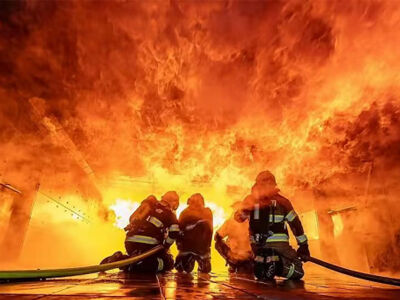
CFBT (Compartment Fire Behavior Training) originated in Sweden and has become a core component of fire training systems worldwide. It is a science-based training methodology focused on the development, spread and behavioral patterns of fires in confined spaces such as rooms, ship compartments and basements. CFBT emphasizes observing and interpreting critical indicators including fire-generated smoke, thermal layering and air track. Firefighters use these signals to identify the fire stage—incipient, growth, fully developed, or imminent flashover/backdraft—and select the most appropriate tactics for attack, ventilation or withdrawal.
CFBT integrates fire behavior, stream application techniques and ventilation tactics into a structured firefighting framework, unifying interrelated but traditionally separate training disciplines. It provides a comprehensive foundation for building structural firefighting knowledge and skills. Using live-fire training facilities (e.g., containerized fire chambers), CFBT lets firefighters experience realistic conditions in a controlled environment to develop sound “fireground intuition.”
Core Concepts of CFBT
Flashover: All combustible surfaces within a compartment reach ignition temperature simultaneously, and the entire space is engulfed in flames in an instant. Firefighters must withdraw or implement cooling measures before flashover occurs.
Backdraft: Explosive combustion triggered by sudden oxygen introduction into a ventilation-limited fire.Firefighters must recognize "pulsing" smoke and avoid hasty entry.
Thermal Layering: Hot smoke rises and cool air sinks, forming distinct layers. Firefighters must travel in a low posture to preserve thermal balance.
Rollover: Flame propagation horizontally along the bottom of the smoke layer, indicating imminent flashover. This is an emergency signal requiring immediate cooling or withdrawal.
Air Track: The direction of air and smoke movement, such as air entering at the bottom of a door frame and smoke exiting at the top. Firefighters use it to assess compartment pressure and ventilation status.
Core Content of CFBT
CFBT combines classroom theory and live-fire practical exercises, covering:
Theoretical Study: Basic fire behavior, the fire triangle and heat transfer mechanisms.
Theory + Live-Fire Drills: Learning to "read" building factors(like structure), smoke (like color), heat (like layer height), air track(like flow patterns) and flame (like color) for accurate assessment.
Theory + Live-Fire Drills: Identifying pre-warning signs of flashover, backdraft and smoke explosions.
Theory + Live-Fire Drills: Recognizing critical transitions from fuel-controlled to ventilation-controlled fires(the threshold where fire growth is limited by oxygen supply rather than fuel availability).
CFBT Requirements for PPE
The training environment in CFBT is every bit as demanding as a real fire ground. During simulated extreme thermal conditions, firefighters are exposed to prolonged high heat radiation and frequently perform crawling, rolling, and forcible entry operations. Equipment performance therefore directly determines the safety and effectiveness of the training.
For firefighter protective clothing, prolonged exposure to high radiant heat requires compliance with high standards as EN 469:2020 Level 2 to provide sufficient thermal protective performance.
For self-contained breathing apparatus (SCBA), CFBT sessions typically last tens of minutes, requiring a minimum of 30 minutes of air supply(like 6.8L/300bar carbon fiber cylinder). SCBA is critical in smoke-filled, oxygen-deficient training environments.
For helmets, gloves, and boots, the equipment must deliver impact resistance, abrasion and cut resistance, puncture protection, and thermal insulation to safeguard firefighters throughout training.
Through repeated live-fire exercises CFBT helps firefighters rapidly recognize hazard cues, master suppression techniques and strengthen teamwork. It is widely adopted by fire services globally as a foundational course for new recruits and is included in regular refresher training to maintain proficiency.
Training conditions in CFBT are nearly as demanding as real fire ground environments. Therefore, all personal protective equipment (PPE) must comply with EN standards; equipment performance directly determines training safety and effectiveness.
ATI-FIRE supplies fire training centers worldwide with PPE manufactured to EN standards, ensuring reliable protection even during repeated high-intensity training. If you need firefighting Personal Protection Equipment, sincerely welcome to contact ATI-FIRE. Whether on the real fire ground or in training, ATI-FIRE stands side by side with firefighters.