
 EN
EN
 AR
AR
 HI
HI
 JA
JA
 KO
KO
 NO
NO
 RU
RU
 CA
CA
 TL
TL
 IW
IW
 ID
ID
 SR
SR
 UK
UK
 VI
VI
 SQ
SQ
 GL
GL
 MT
MT
 TH
TH
 TR
TR
 FA
FA
 AF
AF
 MS
MS
 SW
SW
 CY
CY
 IS
IS
 MK
MK
 HY
HY
 AZ
AZ
 EU
EU
 KA
KA
 HT
HT
 UR
UR
 BN
BN
 LA
LA
 MN
MN
 NE
NE
 SO
SO
 MY
MY
 KK
KK
 UZ
UZ
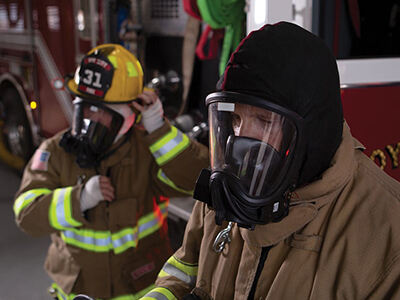
When the firefighters run into a smoke-filled structure the most dangerous thing is not necessarily the flame they see. Unseen assassins, superheated particulate matter and radiant heat, creep through all the crevices of the helmet and coat collar and assail the most vulnerable skin of the neck, ears and face.
Conventional structural hoods mostly protect direct flame contact. However, in the modern dynamic context of rescues ( consider lithium battery fires, chemical flashovers, building collapses), flame resistance would not be good enough. This is exactly how the EN 13911:2017 standard raises the importance of the particulate and flash fire protection to the same level. The intelligent 2-layer flash hood of ATI-FIRE is designed to take this twofold challenge directly.
Part 1: The Invisible Threat - A Two-Way attack of Particulate and Radiant Heat.
Particulate Infiltration: Not Only dust
1. The air is not filled with regular dust, but superheated carbon soot, sharp pieces of fiberglass and microscopic particles that may contain the remnants of chemicals are suspended in the air during heavy combustion or forced entry. These particulates are minute to the extent of infiltrating the weave of common fabrics. When in contact with skin that is persistently moistened by sweat, they will result in unrelenting burning, stinging and may result in considerable discomfort or even damage in the course of lengthy operations.
The Oven Effect of Radiant Heat
2. Surface heat and air heat are directly caused by ubiquitous radiant heat (infrared energy) in a fireground. Also, radiant heat around the head and neck, though not in direct flame contact, may cause rapid localized overheating of a firefighter even without physical contact with flame, thus causing heat stress in the firefighter, increasing fatigue and impairing judgment.
The Vulnerable Triangle
3. The intersection between the helmet rim, the coat collar, and the face results in the most complicated junction in the protecting system a critical triangle that is often prone to gaps of exposure. The last vital step in completing the entire and total protection is the protection of this zone.
Part 2: ATI-FIRE Solution: A Nomex Fortress Dual-layer and Ergonomic intelligence.
We built our ATI-FHD Series Flash Hoods which are strictly adapted to EN 13911:2017 on a philosophy of Physical Barrier + Thermal Buffer construction design with two layers.
Each layer is referred to as layer
1: The Dense Outer Barrier.
Material: 220g/㎡ Nomex 5 Meta-aramid fabric of high quality. Its fine and resilient aramid fibers are effective in blocking the penetration of the majority of the fine particulates.
Performance: This material has intrinsic, permanent flame resistance which burns and does not melt to create a stable initial stand against fire.
2: The Comfortable Inner Buffer.
Construction: An inner coating of the same Nomex roll, in co-operation with the outer shell, forms a stable air-insulating gap. This greatly retards the movement of radiant heat to the skin.
Critical Detail: All stitching uses high temperature aramid thread with integrity of the seams up to 260 o C and the absence of melted stitches to fail.
3: Design Born for the Field
Extended Neck Skirt: Is more specific to cover the neck during bending or looking up.
Flat-Lock Stitching: The entire seams are created to fold flat, radically minimizing the stress points and chafing under a helmet during extended periods of use.
Precision Openings: Face opening has a constant size (less than 3-percent variation rate) and allows a perfect seal to SCBA facepieces without loss of peripheral vision.
Part 3: 5 Metrics of Selecting a Professional Hood.
When choosing a hood to wear in your team, do not just focus on price and thickness. Target the following key performance indicators:
1. Certification: Is it strictly adhering to the most recent EN 13911 or other equivalent international standard? This is the ground measure of performance.
2. Material integrity: Does the fabric consist of flame-resistant fibers (e.g., Nomex 32, Kevlar, etc.)? This dictates whether the protection is impermanent, not depending on the topical treatments that are washable.
3. Dual-Layer Construction: Is it really a functional dual-layer construction? This has a direct effect on its capacity to buffer and barricade both the radiant heat and particulates.
4. APTV Rating: ATPV 25 Cal/cm 2 is one of the most important quantitative values of material in its ability to resist heat transfer. The higher rating implies increased time when it is resistant to exposure to radiant heat.
5. Craftsmanship Information: Is the stitching also fireproof and heat-proof? Are the edges completed in a secure and flat manner? It is these details that come into play on extreme conditions.
Summary: Hide the Skin One Inch at a Time and You Hide the Operational Readiness.
The best firefighting team needs to have the best hood to seal the protection. Our ATI-FIRE Flash Hood is not just a mere accessory but a manifestation of our very philosophy of systemic safety a promise to close any possible risk-related gap.
In our opinion, the ability to see the hidden danger and the refusal to compromise on the fact are the real protection.
Needing to assess or renovate hoods to the team?
Ask us to send our up-to-date ATI-FHD Series Technical Data Sheet and EN 13911 Certification. Our PPE specialists will be willing to give professional guidance.
To talk about the ways to safeguard firefighters against the smoke particles and the appropriate firefighting equipment in your fire department, please call +86 13735068650 or email [email protected].