
 EN
EN
 AR
AR
 HI
HI
 JA
JA
 KO
KO
 NO
NO
 RU
RU
 CA
CA
 TL
TL
 IW
IW
 ID
ID
 SR
SR
 UK
UK
 VI
VI
 SQ
SQ
 GL
GL
 MT
MT
 TH
TH
 TR
TR
 FA
FA
 AF
AF
 MS
MS
 SW
SW
 CY
CY
 IS
IS
 MK
MK
 HY
HY
 AZ
AZ
 EU
EU
 KA
KA
 HT
HT
 UR
UR
 BN
BN
 LA
LA
 MN
MN
 NE
NE
 SO
SO
 MY
MY
 KK
KK
 UZ
UZ
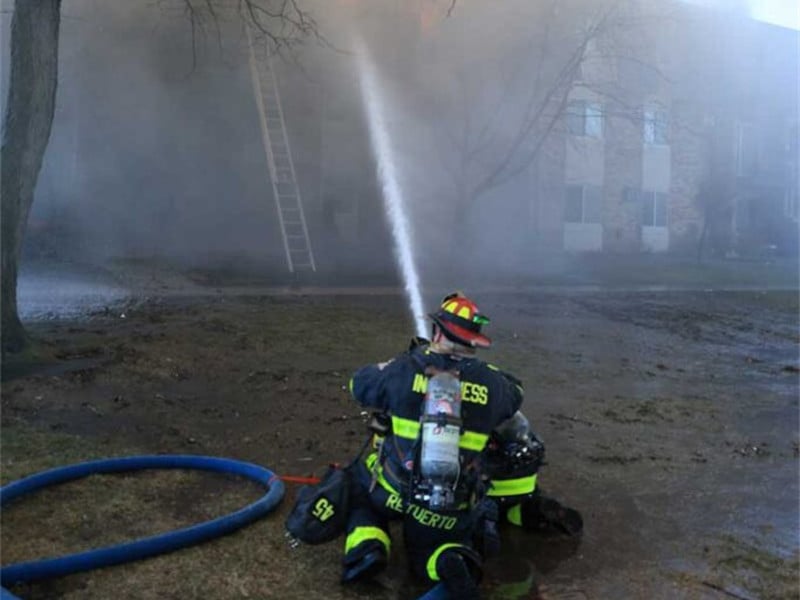
Fire hose is a flexible conduit used to transport high-pressure water, foam, and other flame-retardant liquids. It is the only "lifeline" connecting the water source to the fireground and one of the most frequently used pieces of equipment in the fire service.
Basic Structure and Requirements of Fire Hose
Conventional fire hoses feature natural rubber as the intermediate liner layer, reinforced on both inner and outer sides with 100% highstrength polyester fibres. This type of hose, also known as a double-jacket fire hose, is the primary equipment for urban structural firefighting and industrial fire protection. Its three-layer composite structure balances pressure resistance, abrasion resistance, and sealing performance.
The inner and outer double-layer polyester braided jackets bear the primary pressure-bearing and protective functions. Polyester fiber has high tensile strength, and the dense warp-and-weft woven mesh evenly distributes the tension generated by water pressure. The inner braided layer fits tightly against the rubber layer, sharing the internal water pressure. The outer braided layer directly faces the fireground environment, resisting ground sand and gravel abrasion, sharp-object scratching, and outdoor UV aging, significantly reducing the risk of damage in complex fireground conditions. Compared with single-jacket hose, abrasion and tear resistance are markedly improved.
The natural rubber sandwiched between the two polyester braided layers is the sealing core of the hose. Natural rubber possesses excellent elasticity and dense water-blocking properties, fitting tightly against both braided layers to prevent high-pressure water leakage. At the same time, the flexibility of rubber allows the hose to be easily bent and coiled for storage without becoming brittle or cracking. Water flow encounters lower resistance along the inner wall, ensuring stable delivery of large-volume water supply.
In addition, both ends of the hose are fitted with metal couplings, allowing connection to another hose to extend distance or to a nozzle to increase liquid spray pressure.
As the critical carrier for fireground water supply, fire hose must continuously withstand water pressure under harsh on-scene conditions such as high temperature, impact, and dragging, while remaining sufficiently flexible and lightweight for firefighters to quickly drag, lay out, and recover in narrow passages, cluttered rubble, and other complex environments. This imposes stringent comprehensive standards on the product: not only reliable pressure resistance and burst prevention, but also excellent flexibility, aging resistance, and mechanical durability; it must withstand repeated dragging and friction without easy damage, remain non-rigid in low temperatures, and not easily fail in high-temperature scenarios, ensuring the safety and stability of the water supply chain.
Model Specifications of Fire Hose
The model specifications of fire hose consist of multiple elements: design working pressure, nominal inner diameter, length and so on.
Working Pressure: Low-pressure fire hose includes three types: 0.8 MPa, 1.0 MPa, and 1.3 MPa. Medium-pressure fire hose includes three types: 1.6 MPa, 2.0 MPa, and 2.5 MPa. Different pressure grades are suitable for different water supply systems.
Inner Diameter Specifications: Nominal inner diameters range from 1 inch to 12 inches. Common specifications are mainly 1 inch, 1.5 inches, 2 inches, and 2.5 inches.
Length: Fire hose lengths are available in various specifications from 10 m to 40 m. Common lengths include 15 m, 20 m, and 30 m.
Core Accessories of Fire Hose – Hose Couplings
Hose couplings are key components that enable rapid connection between hose and hose, fire pumps, hydrants, and mobile water monitors. They perform the functions of connection, sealing, and locking in the water supply chain. By application, common types include hose couplings, pipe thread couplings, reducing couplings, threaded couplings. By structural form, they can be divided into three major categories: quarter-turn, cam-lock (insertion), and Threaded. Threaded couplings rely on threaded engagement for sealing, offering outstanding pressure resistance. They are mostly used in high-pressure water supply equipment, fixed fire monitors, and other scenarios, and are a commonly used coupling type in international firefighting. Meanwhile, in global systems, different regions have developed different standardized coupling systems, among which the most widely used are the German-style coupling (Storz), American-style coupling (NH/NST), and British-style coupling (John Morris).
Storz: The mainstream cam-lock quick coupling in continental Europe. It has no male or female distinction; simply align the lugs and rotate a quarter turn to complete the connection. It can be operated quickly by a single person and offers excellent vibration resistance and anti-disconnection performance. It is compatible with DIN 14811 fire hose and is widely used in firefighting equipment in Germany, France, Australia, and other regions.
NH/NST: The mainstream coarse-thread coupling in North America. Its thread pitch is coarser than ordinary pipe threads, reducing the number of turns required. It is compatible with American hydrants and fire hose. Sealing is stable and reliable under high-pressure conditions. However, as a threaded connection, its coupling speed is slower than cam-lock quick couplings. It is commonly found in 2.5-inch specifications and is the standard coupling for US-standard hose.
John Morris: The classic quick-insertion cam-lock coupling used in the United Kingdom and Commonwealth countries (Malaysia, Singapore, and many African nations). It features a double-lug cam-lock structure; align and rotate to lock without threading. It is the standard coupling for British firefighting systems and is also widely used in shipboard firefighting.
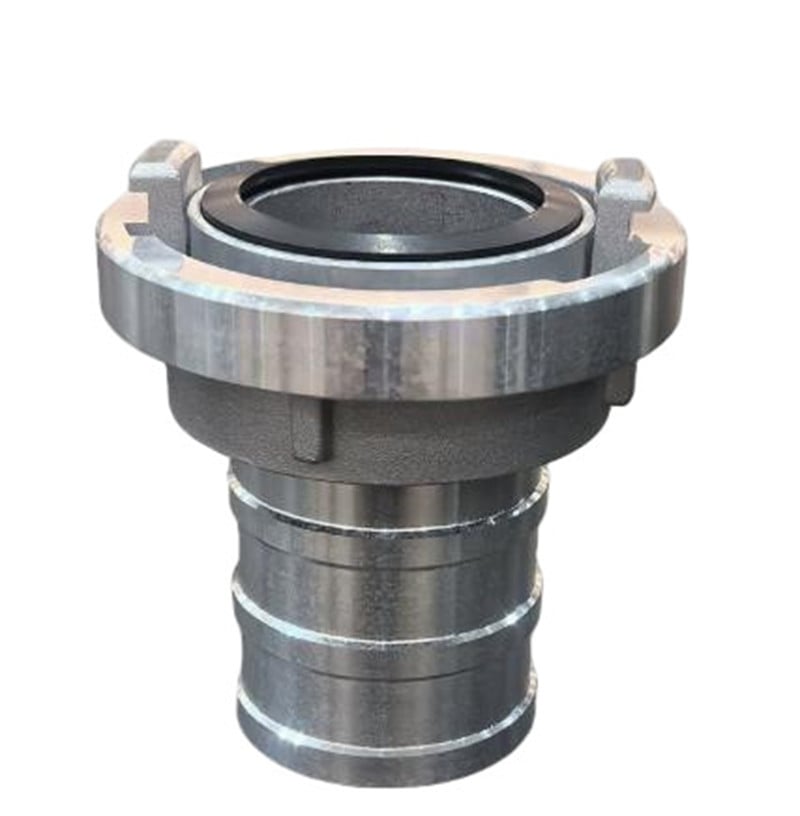
Storz
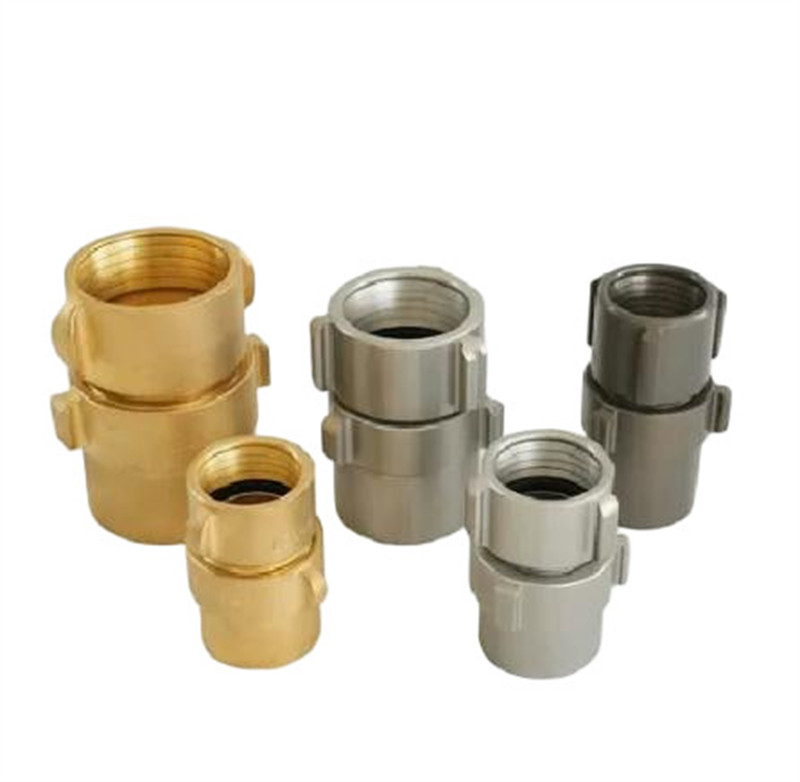
NH/NST
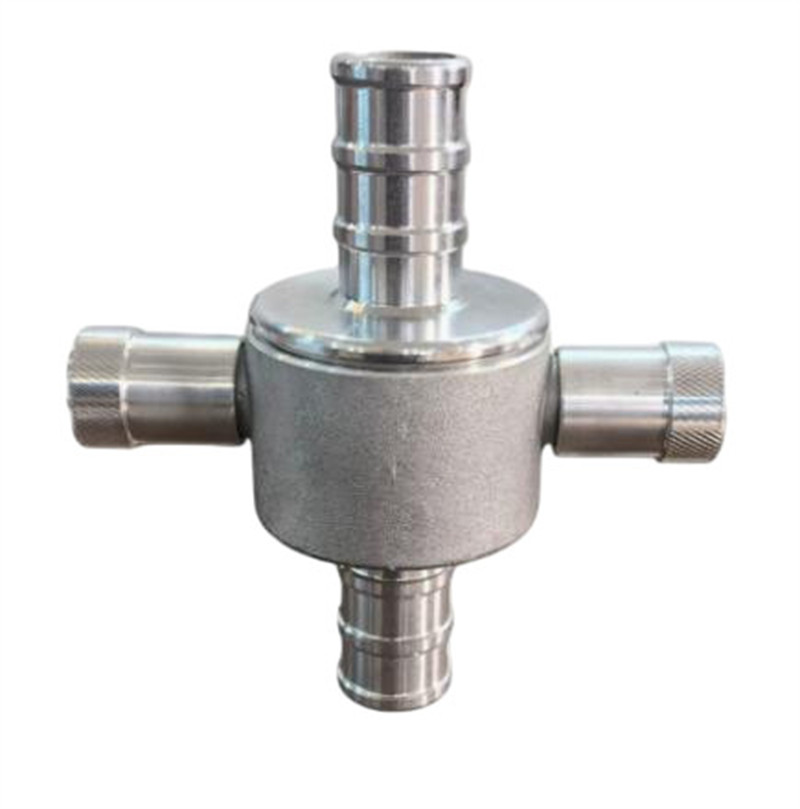
John Morris
Selection, Use, and Maintenance of Fire Hose
The selection of fire hose should take into account: the working pressure of the fireground water supply system, inner diameter and length, and compatibility with local infrastructure. Low-pressure hose is mostly selected for indoor building hydrants. For fire pump and fire truck water supply and industrial fireground suppression, medium-pressure hose of 1.6 MPa and above is preferred. Large-diameter hose is selected for large-space and plant-area firefighting, while small-to-medium diameter hose is selected for narrow corridors and indoor firefighting.
Choosing the right product is only the foundation. The actual service life of fire hose depends largely on daily usage habits and whether maintenance is performed properly. The following are key operational points:
Pre-use Inspection: Confirm that the hose is free of damage, couplings are intact, and working pressure is within the allowable range. Use the hose according to the design working pressure marked on it to prevent excessive pressure from causing hose rupture, damage, or shortened service life.
Laying Requirements: Avoid sharp bends during laying to prevent reduction of pressure resistance. Also avoid twisting to prevent the hose from rotating after being charged, which could cause quarter-turn hose couplings to disengage. When the hose is laid vertically, it should be secured at intervals of approximately 10 m to prevent hose rupture from delaying firefighting operations and causing injury to personnel.
Operation After Charging: After the hose is charged, avoid forcibly dragging it on the ground. Pay particular attention to avoiding contact with nails, glass shards, and other sharp objects. When changing position, lift and move the hose to reduce abrasion against the ground. Do not drag the hose in a V-shape, which can wear through the hose.
Corrosion Prevention: Avoid contact with oil, acids, alkalis, and other corrosive chemicals. Where necessary, hose with an outer cover should be used.
Heavy Load and Freezing Prevention: Avoid placing heavy hard objects on the hose. When vehicles need to pass over a laid hose, a hose bridge should be placed at the crossing point in advance. When laying across railway tracks, the hose should pass beneath the rails. When using fire hose outdoors in cold regions, prevent the hose from freezing.
Post-use Handling: After use, wash and dry the hose, then roll and store it in a cool, dry place. For long-term storage of reserve hose, choose a location with moderate temperature and good ventilation. The hose should be rolled in a single layer and stored upright on a hose rack, with the folds rotated or exchanged twice a year.
Conclusion
Fire hose is one of the most basic and critical pieces of equipment on the fireground. Understanding the classification, specifications, and performance requirements of hose is the foundation for scientific selection. Choosing the right product and mastering correct use and maintenance methods are key to ensuring fireground water supply and personal safety. ATI-FIRE provides fire hose and matching couplings for various models that meet international standards. For more information on firefighting equipment or selection recommendations, please feel free to contact us.