
 EN
EN
 AR
AR
 HI
HI
 JA
JA
 KO
KO
 NO
NO
 RU
RU
 CA
CA
 TL
TL
 IW
IW
 ID
ID
 SR
SR
 UK
UK
 VI
VI
 SQ
SQ
 GL
GL
 MT
MT
 TH
TH
 TR
TR
 FA
FA
 AF
AF
 MS
MS
 SW
SW
 CY
CY
 IS
IS
 MK
MK
 HY
HY
 AZ
AZ
 EU
EU
 KA
KA
 HT
HT
 UR
UR
 BN
BN
 LA
LA
 MN
MN
 NE
NE
 SO
SO
 MY
MY
 KK
KK
 UZ
UZ
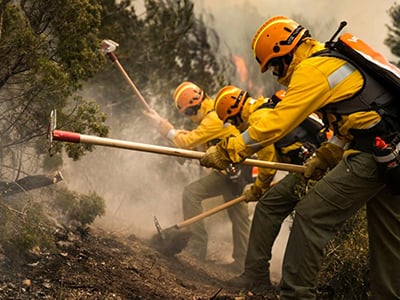
As summer heat intensifies and vegetation continues to dry, the threat of wildland fires escalates. On this battlefield without walls, firefighters face challenges fundamentally different from structural fires—long-distance travel, complex terrain, prolonged operations, and rapidly shifting wind directions and fire behavior. Therefore, unlike structural firefighting gear designed with a priority on heavy-duty protection, wildland firefighting equipment is developed around the core principles of lightweight design and high breathability. It is engineered to meet the demands of long-distance hiking, complex mountainous terrain, and sustained operations in the wild, while avoiding the real-world hazards of heat stress and physical exhaustion caused by heavy, cumbersome gear.
Wildland Firefighting Equipment System
Wildland firefighting PPE is a complete system where every component is indispensable.
Wildland Firefighting Clothing: Wildland firefighting suits typically use single-layer lightweight flame-resistant fabrics, such as the inherently flame-resistant material Nomex® IIIA or FR-Cotton. The single-layer structure offers lower thermal and moisture resistance, providing superior breathability and moisture permeability to ensure the garment can effectively "breathe" and not induce heat stress in the wearer. This allows firefighters to travel farther, making the equipment an extension of their physical capability.
Wildland Firefighting Helmet: Engineered for prolonged, high-intensity operations in the field, the wildland helmet prioritizes lightweight construction and robust ventilation—with total weight typically kept between 500–700g. Strategically placed ventilation channels on the top and sides, combined with a ventilated suspension system and mesh lining, create through-flow airflow pathways: outside mountain breezes enter through the outer vents, carrying accumulated sweat and heat out through rear exhaust ports, significantly reducing heat buildup inside the helmet and mitigating the risk of heat stress and heatstroke. The underlying design philosophy is “physical capability first, protection proportionate.”
Wildland Firefighting Gloves: Wildland gloves forgo the heavy multi-layer insulation of structural firefighting gloves. The outer shell is constructed from single-layer full-grain flame-resistant cowhide, with additional leather reinforcement at the palm and thumb for abrasion resistance. A thin aramid knit liner is sewn inside for comfort. Emphasis is placed on wear resistance to withstand prolonged vegetation clearing, preventing injury from hot embers and friction, and ensuring efficiency during sustained field operations.
Wildland Firefighting Boots: Wildland boots feature a lightweight full-grain leather upper paired with a breathable flame-resistant lining—balancing high-level protection with long-distance hiking comfort. The shaft height meets the 8-inch standard to prevent embers from entering through the pant leg opening. Emphasis is placed on comfort and breathable moisture management to prevent foot discomfort, sweat accumulation, and fatigue swelling during extended wear. On single-day hikes of several kilometers and continuous fireline operations lasting hours, this design effectively reduces lower limb strain and energy expenditure, supporting sustained mobile operations.
Respiratory Protection (Mask): In wildland fires, incomplete combustion of vegetation continuously releases carbon monoxide, aldehydes, polycyclic aromatic hydrocarbons, and other toxic gases and carcinogenic particulates. A full-face respirator with activated carbon filters is an indispensable piece of protection on the fireline, preventing poisoning that can cause dizziness, nausea, cardiopulmonary damage, and impaired judgment—all potentially fatal in the field.
Goggles: Unlike structural firefighting, which often employs large rigid flip-up face shields attached to helmets to protect against molten metal and debris, wildland firefighting prioritizes ventilation and weight reduction for prolonged climbing and stooped work. Lightweight anti-fog goggles are preferred to protect the eyes from airborne debris and intense UV radiation, providing stable vision with minimal physical drain. This allows firefighters to maintain clear judgment and execute firefighting tasks efficiently during hours of continuous exposure to smoke.
Every component is indispensable. The complete protective chain is only as strong as its weakest link; a single missing or inadequate piece means compromised protection. Full protection—from head, torso, hands, feet, respiratory, and eyes—is essential.
Structural Firefighting vs. Wildland Firefighting Equipment
Structural firefighting operates within a relatively contained building environment, where the core logic is “protection first” —facing the risks of flashover and backdraft in enclosed spaces, the equipment must provide the highest level of thermal protection. The three-layer construction (outer shell + moisture barrier + thermal liner) exchanges thickness and weight for safety redundancy. Wildland firefighting, by contrast, takes place in an uncontrollable natural environment where the core logic is “physical capability first” —facing kilometers of hiking and hours of sustained operation, the equipment’s primary objective is to prevent firefighters from exhausting their physical reserves before they even reach the fireline.
The following comparison illustrates these differences more clearly:
| Comparison Dimension | Structural Firefighting | Wildland Firefighting |
| Protection Philosophy | Protection First—exchanging thickness and weight for safety redundancy | Physical Capability First—ensuring sustained operational capacity through lightweight and breathable design |
| Garment Construction | Three-layer composite (outer shell + moisture barrier + thermal liner) | Single-layer or double-layer lightweight flame-resistant fabric |
| Thermal Protection Level | Extreme (designed for flashover risks in enclosed spaces) | Moderate (designed for radiant heat exposure in open environments) |
| Application | Building interiors, enclosed spaces | Open fields, mountainous terrain, forests |
Conclusion
Firefighter protective clothing is not simply “heavier equals safer.” Lightweight equipment is better suited for wildland firefighting operations that require long-distance travel. Lightweight does not mean compromising protection; it means using lighter-weight materials that maintain protective performance while enhancing breathability and agility. ATI-FIRE has a deep understanding of the fundamental differences in equipment requirements between structural and wildland firefighting. We provide high-quality PPE for both structural and wildland firefighting applications. If you would like to learn more about wildland firefighting equipment selection or product information, please feel free to contact us. We will recommend the most suitable products based on your actual operational needs.