
 EN
EN
 AR
AR
 HI
HI
 JA
JA
 KO
KO
 NO
NO
 RU
RU
 CA
CA
 TL
TL
 IW
IW
 ID
ID
 SR
SR
 UK
UK
 VI
VI
 SQ
SQ
 GL
GL
 MT
MT
 TH
TH
 TR
TR
 FA
FA
 AF
AF
 MS
MS
 SW
SW
 CY
CY
 IS
IS
 MK
MK
 HY
HY
 AZ
AZ
 EU
EU
 KA
KA
 HT
HT
 UR
UR
 BN
BN
 LA
LA
 MN
MN
 NE
NE
 SO
SO
 MY
MY
 KK
KK
 UZ
UZ
When purchase or evaluate structural firefighting PPE, the conversation almost invariably centers on one question: How well does it protect against heat and flame? Alomst about thermal Protective Performance (TPP) ratings, flame resistance, and heat insulation. But here is a factor also important—Wear resistant.
Wounds, cuts, bleeding, and bruising account for 14 percent of all fireground injuries — nearly double the rate of burns. Overexertion or strain leads the list at 27 percent, followed by falls, slips, and trips at 22 percent. Contact with objects accounts for another 11 percent, with four percent of injuries caused by being struck by an object. These are not thermal injuries. They are mechanical injuries — and they occur every day in training facilities and on firegrounds around the world.
If your PPE selection process stops at flame resistance, you are leaving your firefighters exposed to the hazards they actually face most often.
In the usual training environment, firefighters spend hours each day in full structural PPE, performing physically intensive evolutions, train on all possible events that may occur in a real fire scene. They crawl through confined spaces, drag charged hose lines, force entry through doors and walls, climb ladders, and operate power tools like chainsaws and rotary saws.
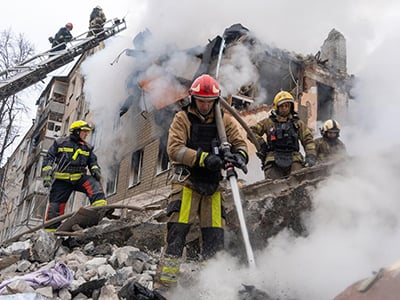
And in the actual firegrounds. Structural collapse, falling debris, sharp metal edges, broken glass, and protruding nails are ever-present hazards. Firefighters crawl through rubble, kneel on debris-strewn floors, and maneuver in tight spaces where gear is constantly abraded against rough surfaces. They will face:
· Abrasion: Knees and cuffs bear the brunt of crawling and kneeling on rough surfaces.Sharp concrete, coarse gravel, angular building debris, asphalt, and charred building components will constantly scratch and wash the knee fabric and cuffs. Repeated friction and abrasion can easily cause holes and harm firefighters.
· Tearing: Catching a coat or pants on a corner, nail, or sharp edge can tear through the outer shell. Expose firefighters to thermal injury, mechanical injury, and various environmental risks.
· Cutting and Puncturing: Sharp debris, broken glass, and metal edges are constant hazards. The concentrated point load applied by sharp objects can cut or pierce the outer fabric of protective clothing. Even shallow cuts and tiny puncture holes can further expand when the limbs bend, crawl, or come into contact with high-temperature surfaces, damaging the fabric's protective barrier. Once the fabric is pierced, firefighters will face the risk of skin cuts, thermal burns, and the invasion of toxic combustion products.
So flame resistance alone is not enough for the structural firefighting PPE. The outer shell should provide flame resistance — it does not ignite and does not drip molten material when exposed to flame. But it also needs to provide abrasion resistance, holding up against the physical punishment of crawling through rubble, broken glass, and debris. It must withstand tearing, puncturing, and cutting from sharp edges and protruding objects. So to protect wearers from injuries such as cuts, bleeding, bruises, and the reduced mobility caused by these which are more dangers.
While regarding to the newest EN 469: 2020 standard, critical tests—including seam and fabric tear strength—must now be conducted after five wash-and-dry cycles rather than on new, unused materials, specifically to verify that performance is maintained throughout the garment's service life. Outer shell tear strength must meet a minimum of 30 N after five washes, while main seam tensile strength has been raised from 225 N to 300 N under the new standard. It stresses that thermal protection and mechanical protection are not competing priorities — they are complementary requirements. A comprehensive PPE strategy addresses both.
So next time when you evaluate structural firefighting PPE for your academy or department, look beyond the TPP rating and flame resistance claims. Ask about abrasion resistance and tear strength also. Keep in mind that flame resistance is basic, mechanical protection is essential.
We, ATI-FIRE, understand that structural firefighting PPE must protect against the full spectrum of fireground hazards — not just heat and flame, but also abrasion, tearing, cutting, puncturing, and impact. Strictly follow the newest EN 469:2020 stanard to produce, and all the suits are passed test and certificated. We aim to protect firefighters from everything the fireground throws at them. For more information about our product specifications or to request technical documentation, please feel freely to contact our team.